Follow by Email

Sign up to receive this newsletter and get special low genealogy discounts sent to your email.

Enter your email address:

Delivered by FeedBurner

Thursday, May 16, 2019

George Fox of Bennett's Creek #ncgenealogy #northcarolinapioneerscom

George Fox Dared to Go to Bennett's Creek
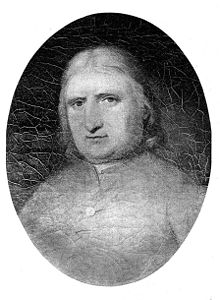
George FoxIn 1654, King Charles II granted eight proprietors authority over an immense region south of Virginia, and within a year had appointed a governor and six-man advisory council to the Albemarle River. This is how the province of North Carolina was born. Then, in 1672, a Quaker missionary by the name of George Fox borrowed a rotten canoe from a captain who resided on Edenton Bay and spent several days paddling to Bennett's Creek. George Fox was an English Dissenter and a founder of the Religious Society of Friends, commonly known as the Quakers or Friends. Fox traveled Great Britain expressing his religious views and was persecuted to the extent that he came to America and visited the low countries.  . . . more. . .


Index to North Carolina Wills and Estates

SPECIAL GENEALOGY OPPORTUNITY NOW for yourself and friends! $7 (auto expires after 1-month)
Try it out now to see if you can find your ancestors

Online Genealogy

Thursday, May 9, 2019

Nathaniell Batts House #ncgenealogy #northcarolinapioneerscom


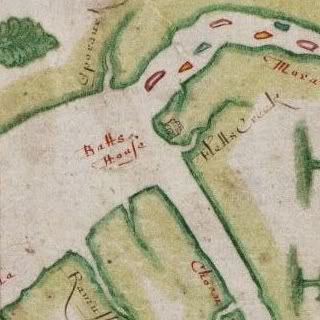
The Nathaniell Batts House on Salmon Creek

Site of Nathaniell Batts HomeNathaniell Batts was a fur trader who was employed by George Yeardley of the Lynnhaven River in Virginia to explore the Albemarle Sound (now in North Carolina). During 1653, Batt engineered an arrangement between Yeardley and Chief Kiscatanewh of the Pasquotank Indians for Yeardley to purchase a large tract of land at the mouth of the Pasquotank River. Part of the arrangement was that Yeardley would construct an English-style house furnished with English goods for Kiscatanewh. Hence, in 1655 Yeardley employed the carpenter, Robert Bodnam and five workmen to build this house. Also, they built a home for Nathaniell Batts in order for him to trade with the Indians. Bodnam spent five months in the Albemarle Sound and Yeardley died while the work was still in progress. A twenty foot log home for Nathaniell Batts was erected on the south side of Salmon Creek and, having two rooms and a chimney. Batts used the house mostly during fur-trading seasons. After 1655, he settled on the Lynnhaven River. Eventually, however, he resettled on the Albemarle Sound in Edenton where he owned land. Batts informed George Fox in 1672 that he was formerly a (proprietary) Governor in Carolina over a handful of settlers who occupied the land until they were driven off by the Tuscarora Indians. John Lawson visited the Batts log house on Salmon Creek in 1708. Source: A New Voyage to Carolina by John Lawson (1967); Nathaniell Batts: Landholder on Pasquotank River, 1660 by Elizabeth GHregory McPherson. . . . more . . .


Index to North Carolina Wills and Estates

SPECIAL GENEALOGY OPPORTUNITY NOW for yourself and friends! $7 (auto expires after 1-month)
Try it out now to see if you can find your ancestors

Online Genealogy

Thursday, May 2, 2019

The Brave General Isaac Gregory #ncgenealogy #northcarolinapioneerscom

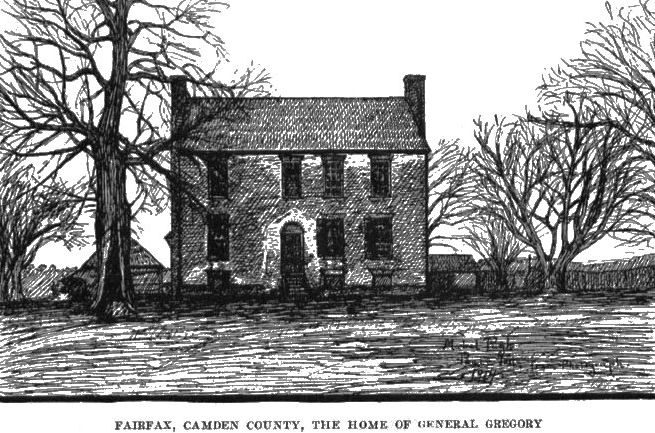
The Brave General Isaac Gregory of Fairfax Hall

Fairfax Plantation

It was General Isaac Gregory, one of the bravest officers who ever drew a sword, who protected the Albemarle region from the British during the American Revolutionary War. Before the long and bloody days began and he proved his worth as a soldier, he commanded a prominent place in the public affairs of his county. His name first appeared in the Colonial Records of North Carolina during 1773 when he was elected sheriff of Pasquotank. Then, in the same year he was appointed one of the trustees of St. Martin's Chapel in Indian Town (Currituck County), a settlement whose citizens were to serve bravely in the war. After the unsuccessful attempt of General Clinton to invade North Carolina in May of 1776, no further effort to place the State under British control was made until 1780. But during the intervening years the Carolina troops had not been idle. Their valor had been proved at Brandywine, Germantown and Stony Point, and during the winter at Valley Forge 1,450 of her soldiers shared with their comrades from the other States the hunger, cold and suffering that was the portion of the army of General George Washington throughout those dreary months. The North Carolina troops aided in the brave but unsuccessful attempt to drive the British from Savannah, 5,000 of her soldiers having been sent to prevent the capture of Charleston; but the patriot forces had been unable to repulse the invaders. Savannah fell, then Charleston, and by the last of May, 1780, both Georgia and South Carolina were in the hands of the enemy, and Cornwallis was threatening to invade North Carolina. Isaac Gregory, who in May of 1779, had been promoted to the office of Brigadier-General of the Edenton District, was ordered to join General Caswell in South Carolina. As soon as he could collect his men, Gregory marched towards the Piedmont section, en route to join the army of General Caswell; and by June he was with the Brigade of General Rutherford at Yadkin's Ford in Rowan. Near this place the Tories had collected, some 800 strong; and Rutherford hoped, with the assistance of General Gregory, to crush them. But to his disappointment, no opportunity emerged because General Bryan, the Tory leader, hearing of the defeat of the Loyalists at Ramseur's Mill a few days before, crossed the Yadkin River and united with General MacArthur, whom Cornwallis had sent on to Anson County. By July 31st, Gregory, with Rutherford and his brigade, joined General Caswell at The Cheraws, just across the South Carolina border. For several weeks there was much suffering among the men on account of the lack of food. Although corn was plentiful, the rivers were so high that the mills could not grind the meal. Meanwhile, the army of Lord Rawdon was stationed near Camden, South Carolina, and General Gates, who had joined Caswell on August 17th after having learned that the British general was daily expecting a supply of food and stores for his men, determined to intercept the convoy and capture the supplies for his own army. In the meantime Cornwallis, unknown to Gates, had joined Lord Rawdon. Gates, ignorant of this reinforcement of the troops of Lord Cornwallis, marched leisurely towards Camden to capture the coveted stores. The result of the historically wasted battle which followed is known only too well. The American militia, panic-stricken at the furious onslaught of the enemy, threw down their arms and fled and General Gates, after a vain attempt to rally his troops, lost courage and abandoned his forces and stores as well. As a result General  . . . more . . .


Index to North Carolina Wills and Estates

SPECIAL GENEALOGY OPPORTUNITY NOW for yourself and friends! $7 (auto expires after 1-month)
Try it out now to see if you can find your ancestors

Online Genealogy

Thursday, April 25, 2019

Blackbeard in Beaufort #ncgenealogy #northcarolinapioneerscom

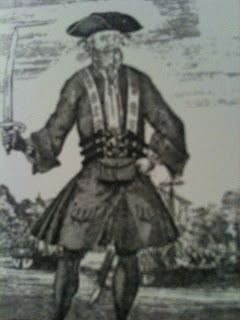
Blackbeard in Beaufort

William TeachWhen Spain threatened the colonists from St. Augustine, Florida (about 1740), pirates pilfered the shores of the Atlantic ocean. One in particular was William Teach, known as "Blackbeard." Teach was born ca 1668 in Bristol, England and died on 22 November 1718 on Ocracoke Island, North Carolina. He was seen in the Carolina ports of Beaufort and Charleston. He was captain of the vessel "Queen Anne's Revenge." When he sailed into Charleston South Carolina during May of 1718, he blockaded the harbor and plundered nine ships. Also, he took prisoners and demanded that the city provide him with medical supplies. When they agreed, he sent a party ashore. When his men returned with the supplies, Teach released his prisoners. While in Charleston, Teach learned that Woodes Rogers had orders to 
rid the Caribbean of its pirates. So he sailed north for the Beaufort Inlet of North Carolina, called "Topsail". Upon reaching the inlet, Queen Anne's Revenge struck a sandbar and was badly damaged. In the process of attempting to save that vessel, the ship, Adventure was also lost. He then . . . more . . .


Index to North Carolina Wills and Estates

SPECIAL GENEALOGY OPPORTUNITY NOW for yourself and friends! $7 (auto expires after 1-month)
Try it out now to see if you can find your ancestors

Online Genealogy

Thursday, April 18, 2019

David Greer and Bald Mountain #ncgenealogy #northcarolinapioneerscom

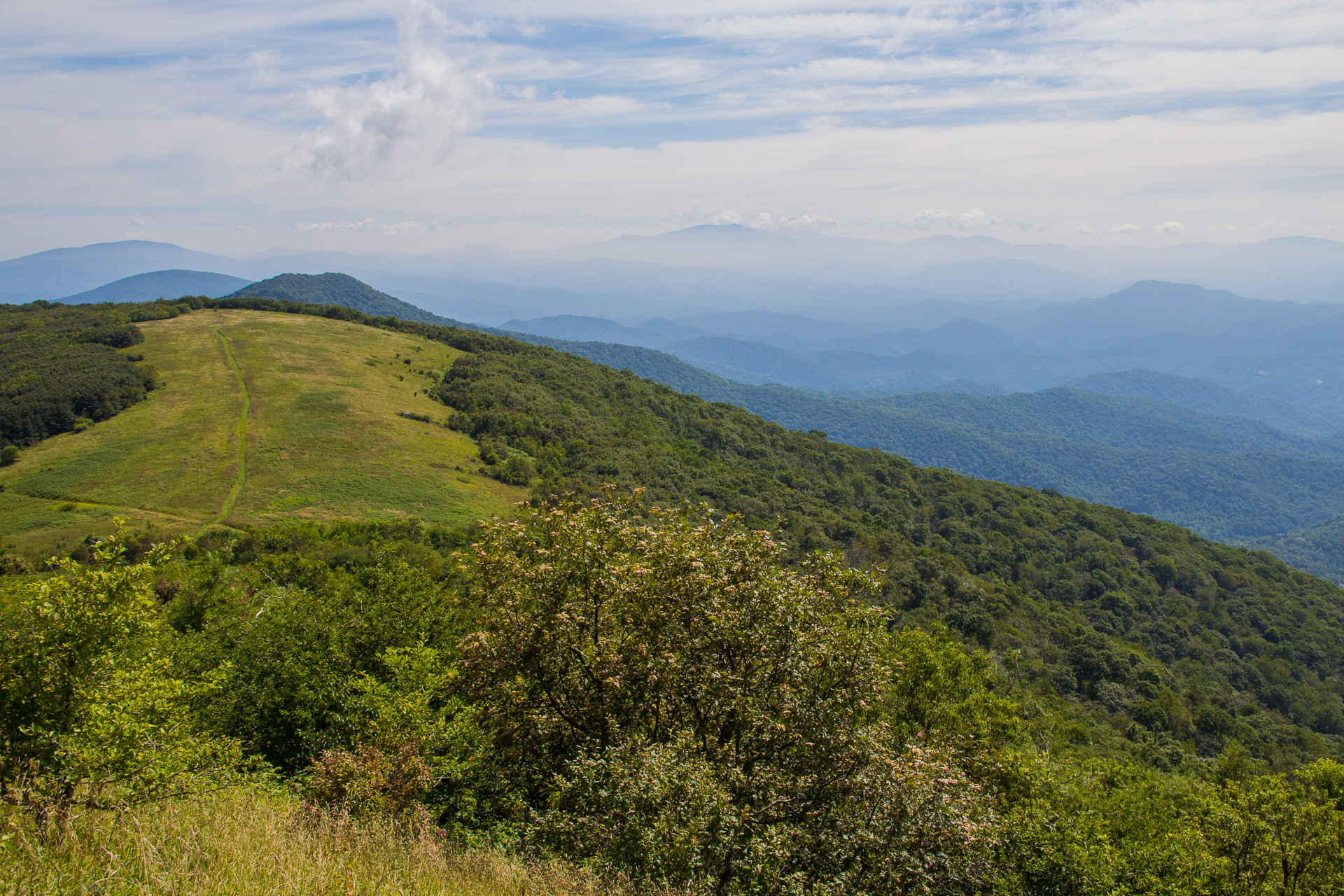
David Greer and Bald Mountain

Bald MountainFrom Letters from the Alleghany Mountains by Charles Lanman (1849). "I now write from a log cabin on the Catawba River, and in one of its most beautiful valleys. My ride from Asheville to Burnsville, a distance of over forty miles, was unattended by a single interesting incident, and afforded only one mountain prospect that caused me to rein in my horse. But the prospect alluded to embraced the entire outline of Bald Mountain, which, being one of the loftiest in this section of the country, and particularly barren, presented a magnificent appearance. On the extreme summit of this mountain is a very large and intensely cold spring of water, and in its immediate vicinity a small cave and ruins of a log cabin, which are associated with a singular being named David Greer, who once made this upper world his home. He first appeared in this country about fifty years ago; his native land, the story of his birth, and his early history, were alike unknown. Soon after his arrival among the mountains, he fell desperately in love with the daughter of a farmer, but his suit was rejected  . . . more . . .


Index to North Carolina Wills and Estates

SPECIAL GENEALOGY OPPORTUNITY NOW for yourself and friends! $7 (auto expires after 1-month)
Try it out now to see if you can find your ancestors

Online Genealogy

Thursday, April 11, 2019

Emigrants to North Carolina #ncgenealogy #northcarolinapioneerscom

Emigrants to North Carolina came from 2 Directions

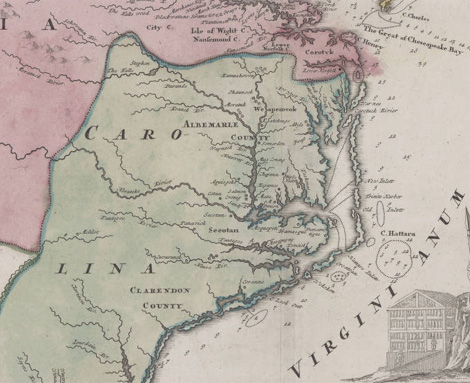
Map of Albemarle County North CarolinaDuring the entire administrations of Governors Johnston and Dobbs, commencing in 1734 and ending in 1765, a strong tide of emigration was setting into North Carolina. They came from two opposite directions. While one current from Pennsylvania passed down through Virginia, forming settlements in its course, another current met it from the South, and spread itself over the inviting lands and expansive domain of the Carolinas and Georgia. Near the close of Governor Johnston's administration (1750) numerous settlements had been made on the beautiful plateau of country between the Yadkin and Catawba rivers. At this time, the Cherokee Indians, the most powerful of the Western tribes, still claimed the territory, as rightful "lords of the soil," and were committing numerous depredations and occasional murders. In 1756, Fort Dobbs about twenty miles West of Salisbury, was built for the protection of the small neighborhood of farmers and grazers around it. Even the thriving colony of Albemarle county on the seaboard now felt its growing importance was beginning to call for "more room," and seek new possessions in the interior, thus unconsciously fulfilling the truth of the poet's prediction, "Westward the course of empire takes its way." Why Antrim Sent so Many Immigrants to America The Trail of the Scotch-Irish into Burke County The Great Wagon Road The Scotch-Irish in Guilford County The Irish Join the Fight for Freedom in America The Tacksmen The Influence of German ImmigrantsSeven Tory Prisoners Taken The Origins of the Bethabara Colony The Western Migration from Philadelphia to North Carolina The Name of the Clan Aboard a Ship from Scotland Migrants in the New County


Index to North Carolina Wills and Estates

SPECIAL GENEALOGY OPPORTUNITY NOW for yourself and friends! $7 (auto expires after 1-month)
Try it out now to see if you can find your ancestors

Online Genealogy

Thursday, April 4, 2019

Colonel Alexander Osborn #ncgenealogy #northcarolinapioneerscom

Colonel Alexander Osborn

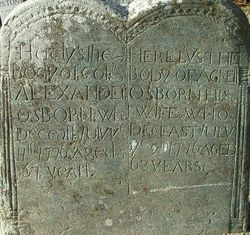
Osborn TombstoneAlexander Osborn was born in New Jersey in 1709, and emigrated to the western part of Rowan county (now Iredell) about 1755. He was a Colonel in the Colonial government, and as such marched with a regiment of Rowan troops to Hillsboro in 1768 to assist Governor Tryon in suppressing the "Regulation" movement. He was married to Agnes McWhorter, a sister of Dr. Alexander McWhorter, president of Queens Museum College in Charlotte. His residence (called Belmont) was one of the earliest worshiping places of the Presbyterians of Rowan county before the present "Center Church" was erected, and became by compromise the central meeting-house of worship for a large extent of surrounding country. In the graveyard of Center Church, on a double headstone, are the following records:
"Here lys the body of Colonel Alexander Osborn, who deceased July y'e 11th, 1776, aged 67 years;" and, separated by a dividing upright line, this record appears:

"Here lys the body of Agnes Osborn, who deceased July y'e 9th, 1776."
The son, Adlai Osborn, who graduated at Princeton College in 1768. He was Clerk of the Court for Rowan county under the Royal government, and continued in that office until 1809. He was a man of fine literary attainments, the warm friend of education, and one of the first Trustees of the State University. He died in 1815, leaving a large family, among whom were Spruce McCay Osborn, who graduated at Chapel Hill in 1806; studied medicine, entered the army as surgeon, and was killed at the massacre of Fort Mimms in the war of 1812; and Edwin Jay Osborn, who was distinguished as a lawyer of eloquence and learning, and was the father of the late Judge James W. Osborn, of Charlotte, one of Mecklenburg's most worthy, gifted and lamented sons.  . . . more . . .


Index to North Carolina Wills and Estates

SPECIAL GENEALOGY OPPORTUNITY NOW for yourself and friends! $7 (auto expires after 1-month)
Try it out now to see if you can find your ancestors

Online Genealogy